
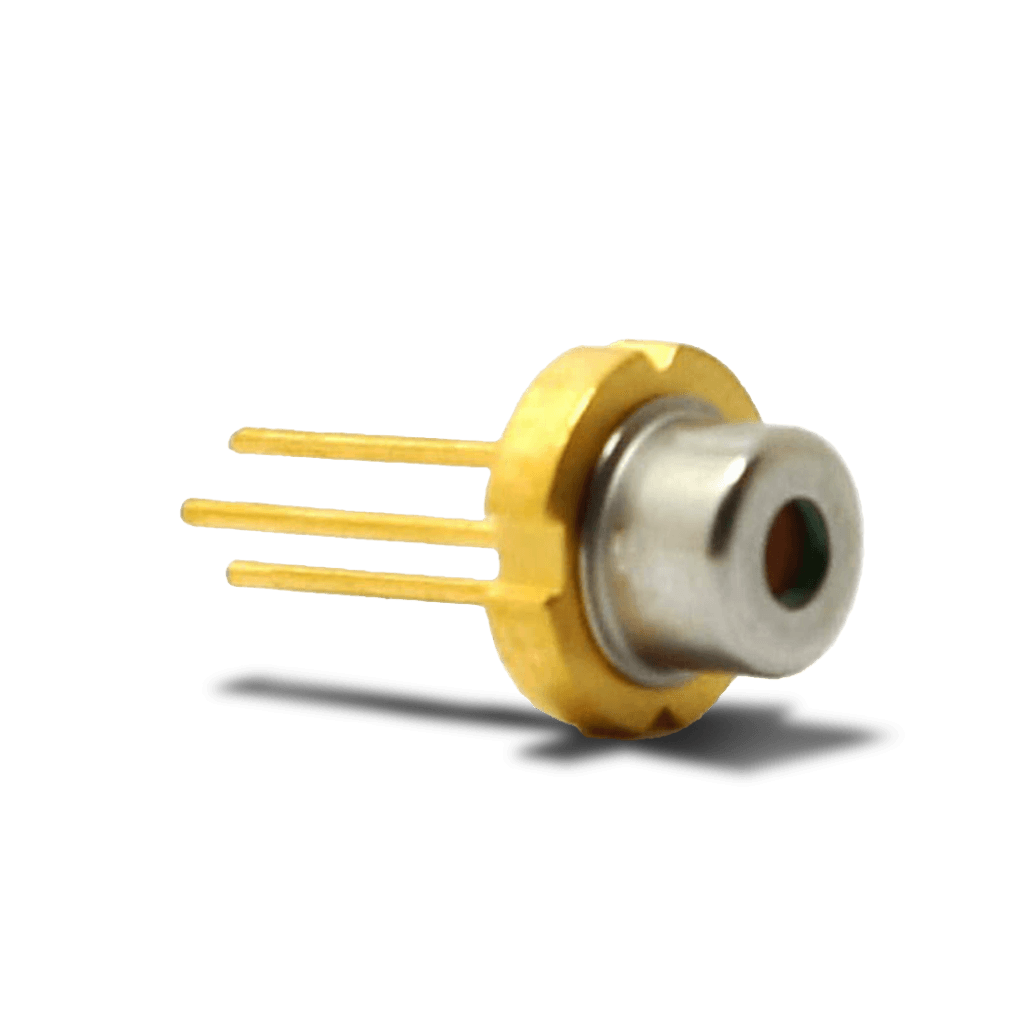
Fabry-Perot (FP) laser diode is a type of laser diode that utilizes a Fabry-Perot (FP) resonant cavity to control the modes of operation and achieve wavelength stability. Fabry-Perot (FP) lasers are a foundational element in the domain of optical coherent tomography (OCT). These lasers are distinguished by their relatively simple yet highly effective architecture, making them a versatile choice for various optical applications in both research and industry. Explore the world of Fabry-Perot (FP) lasers, their working principles, and their applications in telecommunications and astronomy. Discover the advancements in Fabry-Perot (FP) laser technology with InPhenix.
Inphenix designs and manufactures lasers and light sources that are critical in state of the art applications in the medical, telecom, sensing and measurement industries.
Window (nm)
To: From: | Peak
To: Wavelength (nm) | Threshold Current (mA) | Output Power (mW) | Operation Current (mA) | Spectrum Width (rms)(nm) | Package Type | Part Number |
|---|---|---|---|---|---|---|---|
| Window (nm) | Peak Wavelength(nm) | Threshold Current(mA) | Output Power(mW) | Operation Current(mA) | Spectrum Width (rms)(nm) | Package Type | Part Number |
| 785 | 785 to 795 | 400 | 600 | 1000 | 5 | TO 8, 9Ex-Window | IPFPT0701 |
| 1310 | 1290 to 1350 | 20 | 180 | 1000 | 5 | BUT or DIL | IPFPD1302 |
| 1490 | 1450 to 1500 | 20 | 180 | 1000 | 5 | BUT or DIL | IPFPD1402 |
| 1550 | 1520 to 1580 | 20 | 180 | 1000 | 5 | BUT or DIL | IPFPD1502 |
| 1625 | 1610 to 1650 | 20 | 180 | 1000 | 7 | BUT or DIL | IPFPD1602 |
Window (nm)
To: From: | Peak
To: Wavelength (nm) | Threshold Current (mA) | Output Power (mW) | Operation Current (mA) | Slope Efficiency (mW/mA) | Spectrum Width (rms)(nm) | Package Type | Part Number |
|---|---|---|---|---|---|---|---|---|
| Window (nm) | Peak Wavelength(nm) | Threshold Current(mA) | Output Power(mW) | Operation Current(mA) | Slope Efficiency (mW/mA) | Spectrum Width (rms)(nm) | Package Type | Part Number |
| 785 | 785 to 792 | <400 | <200 | 1000 | 0.4 | 5 | BUT or DIL | IPFPD0701 |
| 785 | 785 to 792 | <400 | <400 | 1000 | 0.8 | 5 | TO 8, 9Ex-Window | IPFPT0701 |
| 1310 | 1300 to 1320 | <15 | <100 | <1000 | 0.4 | 5 | BUT or DIL | IPFPD1302 |
| 1310 | 1300 to 1320 | <15 | <100 | <1000 | 0.4 | 5 | TO 8, 9 or 56 Ex-Window | IPFPT1302 |
| 1490 | 1480 to 1500 | <15 | <100 | <1000 | 0.4 | 5 | BUT or DIL | IPFPD1402 |
| 1490 | 1480 to 1500 | <15 | <100 | <1000 | 0.4 | 5 | TO 8, 9 or 56 Ex-Window | IPFPT1402 |
| 1550 | 1540 to 1570 | <15 | <100 | <1000 | 0.4 | 5 | BUT or DIL | IPFPD1502 |
| 1550 | 1540 to 1570 | <15 | <100 | <1000 | 0.4 | 5 | TO 8, 9 or 56 Ex-Window | IPFPT1502 |
| 1625 | 1620 to 1640 | <15 | <100 | <1000 | 0.4 | 7 | BUT or DIL | IPFPD1602 |
| 1625 | 1620 to 1640 | <15 | <100 | <1000 | 0.4 | 7 | TO 8, 9 or 56 Ex-Window | IPFPT1602 |
Structure and Operation
The Fabry-Perot (FP) laser operates by confining a gain medium within a resonant cavity formed by two parallel, partially reflective mirrors. An Fabry Perot (FP) laser consists of mirrors, a gain medium, and a pump source, enabling efficient light amplification. Fabry Perot (FP) is common in OCT for its narrow linewidth, stable output. The essential mechanism of the Fabry-Perot (FP) laser relies on the amplification of light through stimulated emission within this cavity. The mirrors reflect specific wavelengths of light back and forth through the gain medium, selectively amplifying those that satisfy the resonance condition. As a result, the laser emits coherent light at discrete wavelengths determined by the cavity length and the gain medium’s properties.
The principal components of an Fabry-Perot (FP) laser include:
- Gain Medium: This is the material responsible for light amplification through stimulated emission. Common gain media include semiconductor materials, doped fibers, and solid-state crystals. The properties of the gain medium dictate the wavelength range and the efficiency of the laser.
- Mirrors: These are typically highly reflective elements, such as dielectric coatings or Bragg reflectors that define the boundaries of the resonant cavity. The reflectivity and positioning of these mirrors are crucial in determining the laser’s output power and spectral characteristics.
- Pump Source: The pump source supplies the energy required to excite the electrons in the gain medium to a higher energy state, initiating the lasing process. This energy can be delivered through various means, such as an electrical current, optical pumping using another laser, or a flashlamp.
Applications in Optical Coherence Tomography (OCT)
Known for its narrow linewidth and stable output, the Fabry-Perot (FP) laser provides high-resolution imaging and precise measurements in OCT. Cost-effective and reliable. Fabry-Perot (FP) lasers are integral to OCT systems due to their ability to generate narrow linewidths and stable output. These attributes are essential for achieving the high spatial resolution necessary for detailed imaging in OCT. The narrow linewidth enables precise discrimination of different optical paths within the sample, while the stability of the output ensures consistent and reliable data acquisition, which is critical for both diagnostic and research applications.
Advantages in OCT
Key for high-resolution optical imaging, an Fabry-Perot (FP) laser operates with components like gain media and pump sources, making it essential for precision measurements. The key advantages of Fabry-Perot (FP) lasers in OCT include:
- Narrow Linewidth: This characteristic is vital for high spatial resolution, enabling the differentiation of fine structures within the sample.
- Stable Output: Stability in output power and wavelength is crucial for reliable imaging and measurement, particularly in long-term or repetitive scanning scenarios.
- Cost-Effectiveness: The relative simplicity of the Fabry-Perot (FP) laser design, compared to other laser types, allows for lower production costs, making it an economical choice for OCT systems.
Recent Advances
Recent technological advancements in Fabry-Perot (FP) lasers have enhanced their performance and broadened their application scope. The Fabry-Perot (FP) laser structure, essential in optical research, utilizes this Fabry-Perot (FP) laser technology for stable light amplification, enhancing various fields. These innovations include:
- Enhanced Reflective Coatings: The development of high-reflectivity dielectric coatings has improved the efficiency of Fabry-Perot (FP) lasers by reducing intracavity losses, leading to higher output power and better overall performance.
- Advanced Gain Media: Research into new semiconductor materials and doped fibers has yielded gain media with broader wavelength ranges and greater tunability, enhancing the versatility of Fabry-Perot (FP) lasers for different OCT applications.
- Integration with Photonic Circuits: The integration of Fabry-Perot (FP) lasers into photonic integrated circuits (PICs) represents a significant advancement. By combining multiple photonic functions onto a single chip, these systems become more compact and efficient, which is particularly advantageous for portable OCT devices.
Technical Improvements and Customization
The evolution of Fabry-Perot (FP) laser technology has also seen a trend towards customization to meet specific application requirements. Adjustments in cavity length, mirror reflectivity, and gain medium composition allow for precise control over the laser’s output characteristics. This level of customization enhances the adaptability of Fabry-Perot (FP) lasers to various research and industrial needs, making them an indispensable tool in modern optics.
Integration with Advanced Systems and Environmental Stability
As Fabry-Perot (FP) lasers are increasingly integrated into more complex systems, such as photonic integrated circuits (PICs), their role in advanced optical systems is expanding. These integrated systems not only reduce the size and cost of OCT equipment but also enhance overall system performance.
Furthermore, recent efforts to improve the thermal and mechanical stability of Fabry-Perot (FP) lasers have resulted in devices that maintain consistent performance under varying environmental conditions. This robustness is crucial for applications in harsh or uncontrolled environments, where maintaining laser stability is essential for reliable operation.