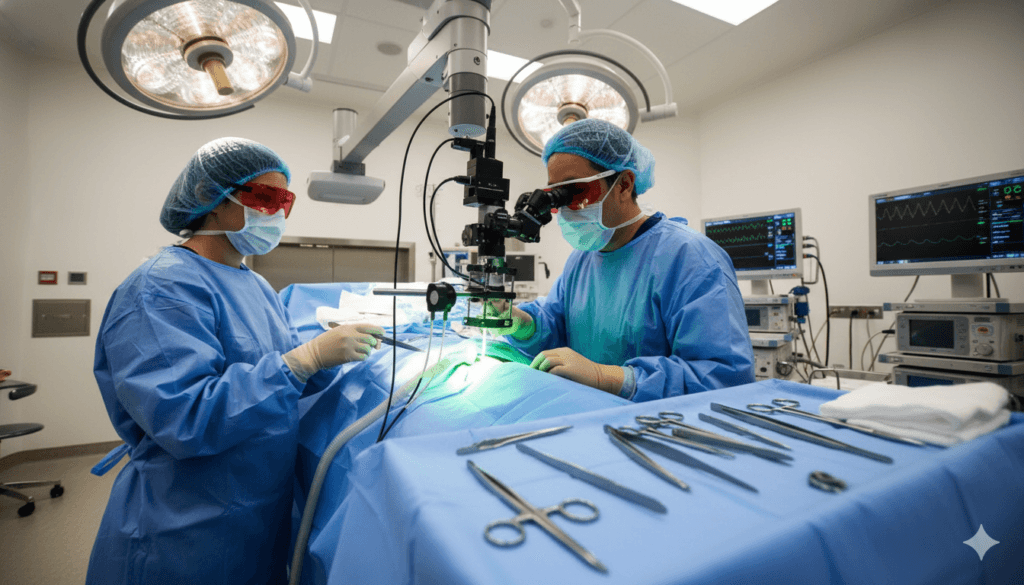
Laser technology, a key aspect of photonics, has become one of the most influential driving forces behind advances in the biomedical industry over the past two decades. Its impact spans across diagnostics, therapy, imaging, surgery, regenerative medicine, biomedical sensing, and drug delivery. As healthcare increasingly demands high accuracy, non-invasive procedures, and real-time monitoring, lasers continue to deliver capabilities that traditional optical and mechanical systems cannot match. Their precision, wavelength selectivity, coherence, and tunability make them indispensable for modern biomedical applications.
In this comprehensive article, we examine how laser technology is shaping the biomedical landscape today, the scientific principles behind its rise, and the future breakthroughs it will enable.
1. The Scientific Foundation of Biomedical Laser Technology
Lasers—Light Amplification by Stimulated Emission of Radiation—produce coherent, monochromatic, and directional beams of light with extremely high intensity. These properties enable lasers to interact with biological tissues in predictable and highly controlled ways. In biomedical science, three characteristics of lasers are especially critical:
1.1 Wavelength Selectivity
Each wavelength interacts uniquely with biological molecules, enabling targeted absorption. For example:
- Near-infrared lasers penetrate deep into tissue for imaging and phototherapy.
- Ultraviolet lasers are ideal for DNA manipulation and micro-machining due to their high photon energy.
- Blue and green lasers efficiently interact with hemoglobin and melanin, useful for vascular and dermatological applications.
1.2 Precision and Focusability
Laser beams can be focused to micron- or even nanometer-scale spots, allowing manipulation of single cells or sub-cellular structures without damaging surrounding tissue.
1.3 Controlled Thermal and Photochemical Effects
Lasers can produce gentle heating, photodisruption, photoablation, or photochemical reactions depending on energy levels and pulse duration. This versatility underpins a wide range of biomedical uses.
These core properties make medical lasers ideal for diagnostics, imaging, surgery, sensing, and therapy across multiple biomedical fields.
2. Laser Technology in Biomedical Imaging
Biomedical imaging has undergone dramatic transformation thanks to laser-based systems. Precision illumination, often enhanced by fiber optics, facilitates communication and allows researchers and clinicians to visualize organs, tissue structures, and even individual cells with unprecedented clarity.
2.1 Confocal and Multiphoton Microscopy
Laser-scanning confocal microscopy provides high-resolution imaging by delivering focused light and collecting fluorescence from a thin optical section. Multiphoton microscopy goes further by using near-infrared femtosecond lasers to penetrate deeper into tissues while minimizing photodamage.
2.2 Optical Coherence Tomography (OCT)
OCT uses low-coherence lasers to generate cross-sectional images of tissue microstructures. It has become essential in:
- Ophthalmology
- Cardiovascular imaging
- Dermatology
- Gastrointestinal diagnostics
Narrow linewidth lasers significantly improve OCT resolution, stability, and imaging depth.
2.3 Fluorescence and Raman Spectroscopy
Laser-excited spectroscopic techniques enable label-free biochemical analysis of tissue, assisting in early cancer detection and metabolic monitoring.
3. Laser-Powered Biomedical Sensing and Diagnostics
The biomedical industry increasingly relies on laser-based sensors for high-sensitivity detection of diseases, pathogens, and biomarkers.
3.1 Laser Biosensors
Laser-induced fluorescence, plasmonic sensing, and interferometric biosensing deliver exceptional sensitivity, detecting biomarkers in nanomolar or even picomolar concentrations.
3.2 Point-of-Care Diagnostics
Compact diode lasers, an advancement in photonics, enable portable blood analyzers, glucose monitors, infection detectors, and handheld spectroscopy devices for rapid patient testing.
3.3 DNA and Protein Analysis
Lasers are central to DNA sequencing machines, flow cytometry, and fluorescence-activated cell sorting (FACS), allowing researchers to analyze cells at extremely high throughput.
4. Laser Technology in Surgery: Precision and Minimally Invasive Solutions
Laser-assisted surgery is one of the most transformative applications in biomedicine, with medical lasers playing a crucial role. By enabling accurate cutting, coagulation, and vaporization, lasers reduce the need for traditional surgical tools and improve patient outcomes.
4.1 Ophthalmic Surgery
Lasers are integral to procedures such as:
- LASIK and SMILE refractive surgery
- Cataract fragmentation
- Retinal repair
Ultrafast femtosecond lasers allow micron-level precision.
4.2 Dermatology and Aesthetic Medicine
Laser systems treat:
- Vascular lesions
- Pigmented lesions
- Acne scars
- Hair removal
- Skin rejuvenation
They allow selective targeting while preserving surrounding tissue.
4.3 Oncology Surgery
Laser ablation can destroy tumors with minimal bleeding and greater precision than thermal cautery. Combined with robotic systems, it enhances minimally invasive oncologic surgery.
4.4 ENT and General Surgery
CO₂ and diode lasers are widely used for soft-tissue cutting due to their ability to deliver clean incisions with minimal collateral damage.
5. Therapeutic Applications: Using Lasers for Healing and Regeneration
Beyond surgery, lasers support several therapeutic modalities through enhanced communication between cellular structures.
5.1 Photodynamic Therapy (PDT)
PDT uses lasers to activate photosensitizing drugs that produce cytotoxic reactive oxygen species. This method shows strong results in treating:
- Skin cancers
- Esophageal cancer
- Lung cancer
- Certain infections
5.2 Low-Level Laser Therapy (LLLT) / Photobiomodulation
Low-power lasers promote cellular repair, reduce inflammation, and improve tissue recovery. Applications include wound healing, pain therapy, and musculoskeletal treatments.
5.3 Laser-Assisted Drug Delivery
Short laser pulses temporarily alter cell membrane permeability, enabling precise drug uptake and targeted therapies.
6. Lasers in Biomedical Research and Engineering
Laser systems are indispensable tools in research laboratories worldwide.
6.1 Optical Tweezers
Highly focused lasers can trap and manipulate single cells, organelles, or nanoparticles, revolutionizing cellular biomechanics research.
6.2 Laser Micro-Machining and Tissue Engineering
Ultrafast lasers can sculpt biomaterials and create microfluidic devices for lab-on-chip systems.
6.3 Gene Editing and DNA Manipulation
UV and femtosecond laser pulses allow micro-dissection, cell perforation, and controlled gene delivery.
7. The Benefits of High-Quality Laser Sources in Biomedicine
Biomedical systems require lasers with exceptional:
- Stability
- Spectral purity
- Narrow linewidth
- Low noise
- High reliability
- Long operational lifetime
High-precision applications such as OCT, spectroscopy, fluorescence imaging, and phototherapy demand medical lasers with superior optical characteristics to ensure repeatable and safe results.
8. Future Trends: The Next Frontier of Biomedical Laser Innovation
The next decade will bring groundbreaking advances in biomedical laser technology, including:
8.1 AI-Integrated Laser Systems
Machine learning will enhance laser tuning, dosimetry, imaging reconstruction, and surgical automation.
8.2 Quantum Lasers for Ultra-Sensitive Diagnostics
Quantum light sources will enable molecular-level sensing with unprecedented resolution.
8.3 Laser-Driven Nanomedicine
Nanoparticles activated by laser light will support targeted cancer therapy and precision drug release.
8.4 Fiber-Based Biomedical Lasers
Compact, efficient fiber lasers will power next-generation point-of-care and wearable diagnostic systems.
Conclusion
Laser technology, particularly advancements in photonics, has become a cornerstone of modern biomedical science, enabling unmatched precision and effective communication in diagnostics, imaging, surgery, therapy, sensing, and research. As healthcare continues shifting toward minimally invasive procedures, personalized medicine, and high-accuracy diagnostics, advanced laser systems will remain essential. From cellular-level imaging to life-saving surgeries, lasers empower clinicians and researchers with tools that were once unimaginable.
If you need high-quality, reliable, and scientifically engineered laser solutions for biomedical applications, partnering with a world-class manufacturer ensures performance, stability, and long-term success. Leading providers such as INPHENIX – World-Class Lasers & Light Sources Manufacturer deliver advanced laser products designed for demanding biomedical environments. Their precision laser sources support applications in imaging, sensing, diagnostics, and surgical systems, helping innovators and biomedical companies achieve superior results.