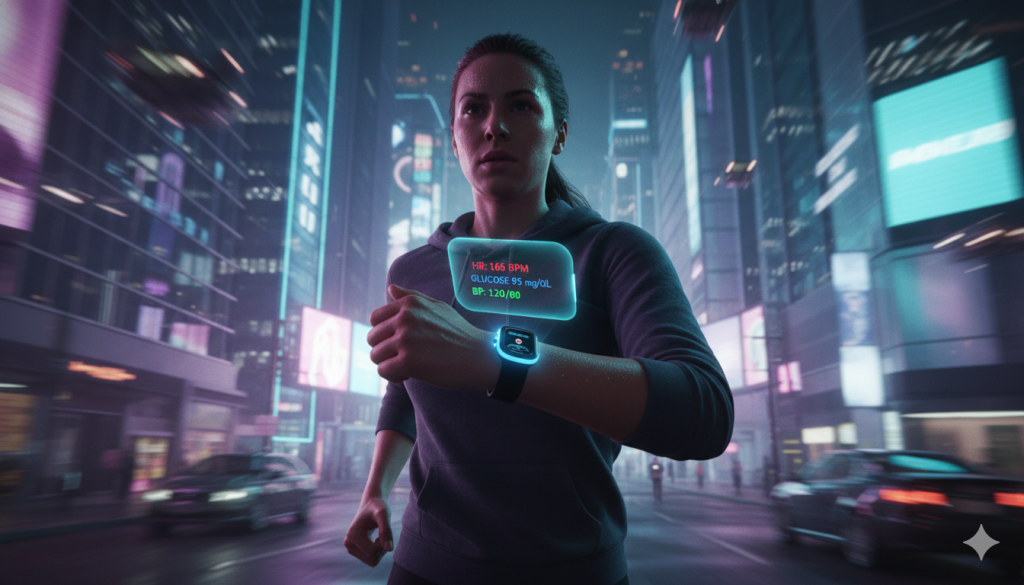
The wearable technology market has undergone a radical transformation over the last decade. We have moved from simple 3-axis accelerometers that counted steps to sophisticated wrist-worn laboratories capable of tracking heart rate variability (HRV), blood oxygen (SpO2), and even performing electrocardiograms (ECG).
However, as we move toward the “Holy Grail” of wearables—non-invasive glucose monitoring and continuous, cuffless blood pressure tracking—the industry has hit a physical ceiling. That ceiling is the Light Emitting Diode (LED).
While the humble LED has powered the wearable revolution, a new challenger is emerging from the world of high-end fiber optics: the Superluminescent Diode (SLED or SLED). In the battle of SLED vs. LED, the stakes are nothing less than the future of clinical-grade biometric tracking.

1. The Physics of Light: Understanding the Players
To understand why SLEDs are suddenly the talk of Silicon Valley and MedTech hubs, we must first understand how they differ from the LEDs currently found on the back of your smartwatch.
What is an LED? (The Current Standard)
A Light Emitting Diode produces light through spontaneous emission. When an electric current passes through the semiconductor material, electrons fall into “holes,” releasing energy in the form of photons. This light is:
- Incoherent:The light waves are not in phase.
- Omnidirectional:It scatters in all directions.
- Broadband:It covers a wide range of wavelengths.
For basic heart rate tracking (PPG) in sport and outdoor applications, LEDs are excellent and add an element of fun; however, when engaging in activities such as winter sports, where snow can affect the sensor’s accuracy, their limitations become apparent. They are cheap, energy-efficient, and come in various colors (Green for heart rate, Red/Infrared for oxygen).
What is a SLED? (The Challenger)
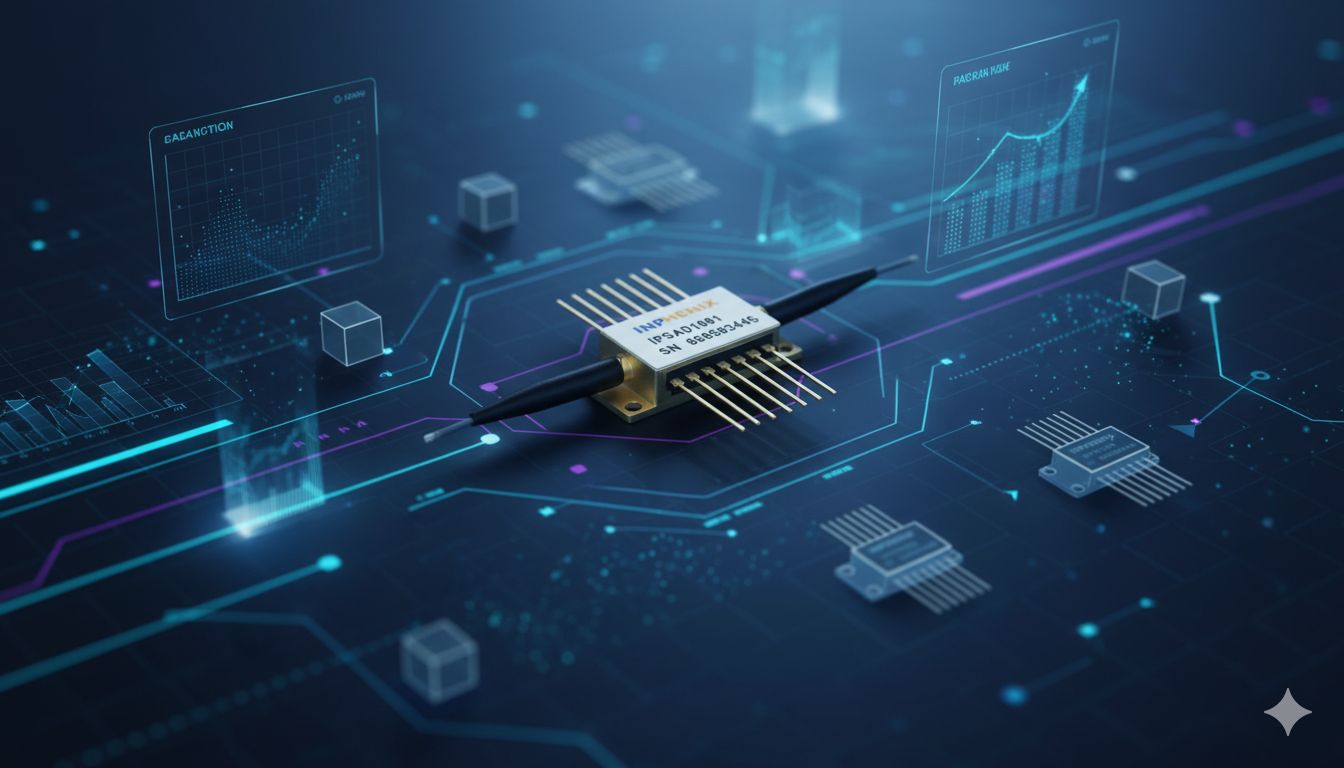
A Superluminescent Diode is a hybrid. It is often described as having the power and directionality of a Laser Diode but the low coherence of an LED. It operates through amplified spontaneous emission (ASE).
The SLED takes the light generated by an LED-like process and amplifies it as it travels through an optical waveguide. The result is a light source that is:
- High Brightness: Much more intense than an LED.
- Spatial Coherence: The light can be focused into a tight, directed beam.
- Temporal Incoherence: Like an LED, it has a broad spectrum, which prevents the “speckle” noise that plagues lasers.
2. Why LEDs are Struggling with Next-Gen Biometrics
If LEDs have worked for ten years, why change the wordplay? The answer lies in the Signal-to-Noise Ratio (SNR).
The Problem of Skin Tone and Body Hair
Standard LED-based PPG sensors often struggle with diverse populations. Melanin and hair can absorb or scatter the diffuse light from an LED, leading to weak signals. To compensate, manufacturers often “crank up” the power, which drains the battery and creates thermal noise.
The Depth Limitation
LEDs provide “surface-level” data. Because the light is incoherent and scatters quickly, it cannot transport deeply into the subcutaneous tissue where more complex biomarkers (like interstitial glucose) reside.
The Motion Artifact Crisis
Because LED light is diffuse, any movement of the watch against the skin causes a massive shift in the light path. This “motion artifact” is why your heart rate might suddenly spike to 180 bpm while you are just adjusting your grip during a run.
3. The SLED Advantage: Precision at the Photon Level
SLEDs solve the primary limitations of LEDs through three distinct physical advantages: Brightness, Directionality, and Low Coherence.
I. High Spectral Power Density
A SLED can emit significantly more power into a narrow spectral range than an LED, offering improved grammar in data analysis by reducing the noise associated with diffuse light. This means the light can penetrate deeper into the skin, reaching the capillary beds and interstitial fluids that contain the most valuable health data.
II. Eliminating Optical “Speckle”
You might wonder: Why not just use a Laser?Lasers are bright and directed. However, lasers have high temporal coherence, which causes “speckle”—a grainy interference pattern. If a sensor moves even a micrometer, the speckle pattern changes, creating massive errors in health data. SLEDs have low coherence, meaning they provide the laser’s power without the laser’s noise.
III. Directional Coupling
Because SLED light is emitted in a directed beam, it can be coupled into modern Silicon Photonics chips or fiber optic sensors much more efficiently than a diffuse LED. This allows for the miniaturization of “Lab-on-a-Chip” technology.
4. Application: Non-Invasive Glucose Monitoring
The most anticipated feature in the history of wearables is non-invasive glucose monitoring, especially as winter approaches and routine testing becomes cumbersome for those braving cold conditions. For the 500 million people with diabetes worldwide, replacing finger-pricks with a smartwatch that can slide seamlessly into their daily routine is a life-changing prospect, as defined in Merriam-Webster.
Why SLEDs are the Key: Monitoring glucose optically requires Near-Infrared (NIR) Spectroscopy. Glucose molecules have a very weak “fingerprint” in the light spectrum.
- An LED is too “blunt” an instrument; its light is too diffuse to pick up the minute changes in light absorption caused by glucose.
- A SLED provides a high-intensity, stable broadband light source that can be tuned to the specific absorption bands of glucose.
Current leaders in this space, such as Rockley Photonics and several rumored Apple-linked research labs, are pivoting toward SLED-based architectures because they provide the “clean” data required for AI algorithms to accurately calculate blood sugar levels.
5. Application: Cuffless Blood Pressure Tracking
Hypertension is a “silent killer.” While current watches can estimate blood pressure using Pulse Arrival Time (PAT), they are often inaccurate and require frequent calibration with a traditional cuff.
The SLED Future: To measure blood pressure accurately without a cuff, a sensor must detect the exact morphology of the pressure wave in the artery.
SLEDs allow for Optical Coherence Tomography (OCT)-style sensing in a wearable form factor. By using SLEDs, sensors can “image” the arterial wall’s expansion and contraction with micrometer precision. This high-fidelity data allows for true, calibration-free blood pressure monitoring.
6. Engineering the Future: The Challenges of SLEDs
If SLEDs are so much better, why aren’t they in every Fitbit and Apple Watch today? There are three major hurdles: Power, Heat, and Cost.
1. The Battery Drain
SLEDs require more current to achieve their high-brightness state. In an era where consumers demand week-long battery life, the high power consumption of a SLED is a major engineering trade-off.
2. Thermal Management
SLEDs are sensitive to temperature. As they get hot, their wavelength shifts. For a medical-grade sensor, a wavelength shift is a disaster. Wearable engineers are currently working on miniaturized Thermoelectric Coolers (TECs) and advanced heat-sinking materials to keep SLEDs stable on a human wrist.
3. The Price Gap
A standard green LED for a PPG sensor costs a few cents when bought in bulk. A high-performance SLED can cost tens of dollars. For a consumer electronics company, adding $30 to the Bill of Materials (BOM) means the retail price could jump by $100 or more.
7. The 2025-2030 Roadmap: Where are we going?
We are currently in a “Hybrid Era.” Most flagship wearables are maximizing what is possible with LEDs through better AI and multi-wavelength arrays. However, the roadmap for 2025 and beyond is clear:
- Phase 1 (2024-2025):SLEDs appear in specialized “Pro” medical wearables and clinical-at-home monitoring devices.
- Phase 2 (2026-2027):Miniaturization through Silicon Photonics allows SLEDs to be integrated onto the same chip as the processor, reducing power consumption.
- Phase 3 (2028+):SLED-powered smartwatches become the standard, offering non-invasive glucose, lactate, and blood pressure monitoring.
8. Conclusion: Which is the Future?
So, is the SLED the future of biometric tracking?
The answer is a nuanced “Yes.”
The LED is not going away. For basic step counting, sleep tracking, and sport-related metrics, the LED is and will remain the most cost-effective and energy-efficient solution. It is the “good enough” technology for the mass market.
However, for the Medicalization of Wearables, the SLEDi s the undisputed future. If we want our watches to function as diagnostic tools that doctors can trust—tools that can detect early signs of heart disease, monitor chronic conditions like diabetes, and provide surgical-grade accuracy—we must move beyond the limitations of spontaneous emission.
The transition from LED to SLED is the transition from a “gadget” to a “medical device.” As manufacturing costs fall and silicon photonics integration matures, the SLED will become the engine of the most significant health-tech revolution of our time.